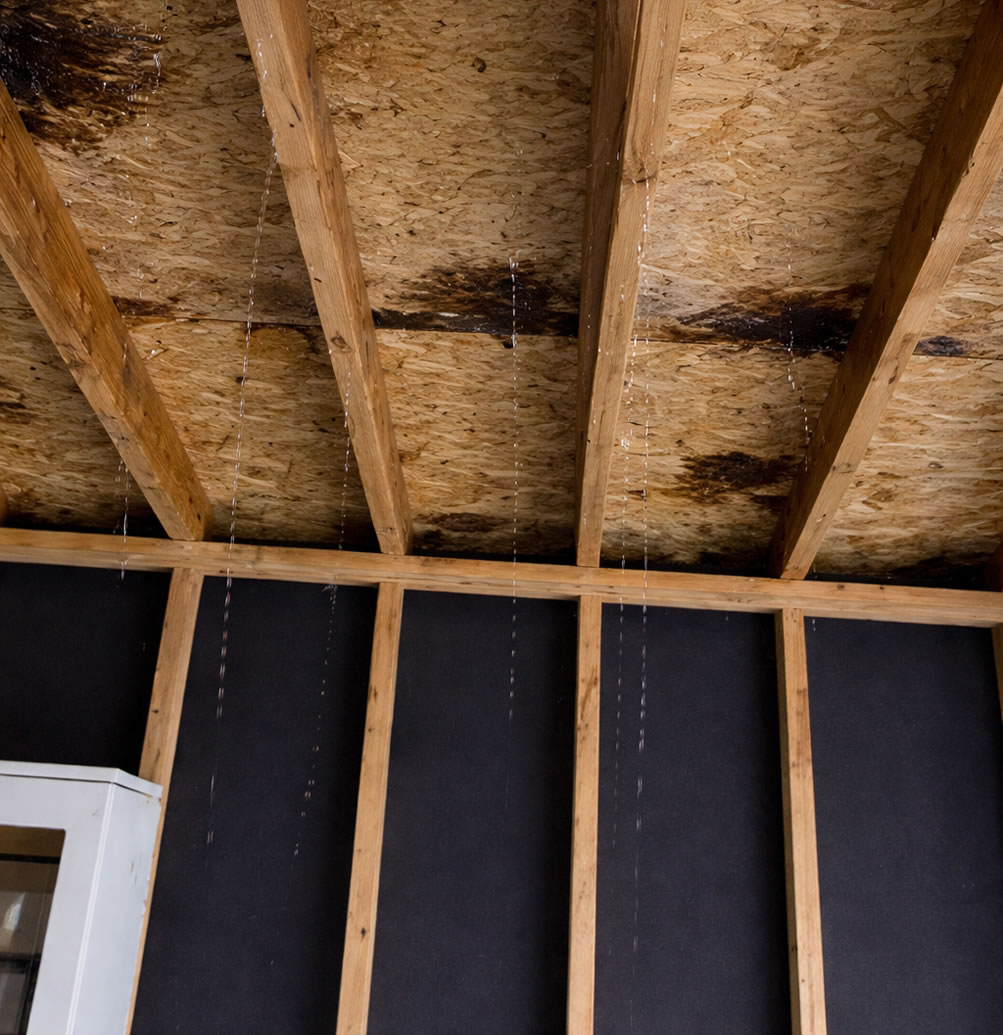
If your garage roof only seems to leak when it’s really chucking it down, that’s a useful clue. Heavy rain overwhelms weak points: gutters can’t cope, outlets back up, and water finds tiny gaps around edges and junctions that stay “fine” in light showers.
Below are the 7 most common UK causes of heavy-rain garage roof leaks — plus what to look for (safely), what the likely fix is, and when it’s time to consider replacement.
First: a quick safety note
- If water is near electrics (lights, sockets, door motors), switch off power to the garage circuit if safe.
- Avoid climbing on the roof. Garages are often awkward and some older sheet roofs can be fragile.
- If you suspect corrugated cement sheets may contain asbestos, don’t disturb them.
1) Overflowing gutters (the “fake roof leak”)
This is one of the most common reasons garages leak in heavy rain.
What happens
During downpours, a blocked or undersized gutter can’t take the volume of water. It overflows, and water runs behind fascia boards or back under the roof edge — which looks exactly like a roof leak inside the garage.
What you’ll notice
- Water spilling over the front edge during heavy rain
- Damp streaks on brickwork or fascia
- Drips starting near the roof edge/door side
Typical fix
- Clear the blockage
- Re-align gutters and fix leaking joints
- Replace damaged sections or improve outlets/downpipes
2) Blocked outlets / downpipes on flat garage roofs
Flat roofs rely heavily on drainage. When outlets block, the roof can leak even if the covering is “mostly OK”.
What happens
The outlet backs up, water pools, and then it finds the weakest point: seams, edges, corners, or around the outlet itself.
What you’ll notice
- A leak that starts late into a storm (after water has built up)
- Water marks near the outlet area
- Standing water on the roof after rain
Typical fix
- Clear/replace the outlet
- Improve drainage flow
- Repair the outlet detail or replace the covering if it’s failing widely
3) Ponding water (flat roofs with poor falls)
Some garages “look flat” but should still shed water. If the roof holds water, heavy rain makes it worse.
What happens
Ponding increases the time water sits on the roof, and under heavy rain it can reach seams and upstands that weren’t designed to hold that depth of water.
What you’ll notice
- Standing water after rain
- Leaks that continue even after rain stops
- Blistering/bubbling felt or repeated seam issues
Typical fix
- Drainage improvements (outlet position, guttering changes)
- In some cases, re-roofing to improve falls (depends on structure)
4) Failed edge details (felt lifting, loose trims, wind-driven rain at edges)
Most flat roof leaks aren’t “in the middle” — they’re at edges.
What happens
Heavy rain combined with wind can push water under lifted felt edges, cracked corner details, or weak drip edges.
What you’ll notice
- Damp line inside along the front wall
- Felt lifting at the front edge or corners
- Leaks worse when rain hits the garage from one direction
Typical fix
- Re-detail the edge properly (not just a smear of sealant)
- Replace damaged trims
- If edges are failing everywhere, consider replacement
5) Wall junction leaks (attached garages where roof meets the house)
If your garage is attached to the house, this is a big one.
What happens
Water runs down the house wall and hits the junction. In heavy rain, tiny gaps in flashing/terminations become leaks. This often shows up as a “mystery leak” because it can look like it’s coming from nowhere.
What you’ll notice
- Damp patch near the wall where garage meets house
- Leak worse in windy rain
- Water tracking along the ceiling line near the junction
Typical fix
- Proper flashing/junction detailing repair
- Improving upstands and terminations on flat roofs
6) Corrugated sheet fixings and overlaps (metal/bitumen/cement sheets)
Corrugated garage roofs often behave fine in light rain, then leak in heavy rain because water volume finds the overlaps and fixings.
What happens
- Washers around fixings degrade
- Fixings loosen slightly
- Overlaps aren’t shedding water fast enough
- Wind can drive water under overlaps
What you’ll notice
- Drips in lines (following the corrugations)
- Leaks near screw lines
- Leaks appear “random” but often align with overlaps
Typical fix
- Replace fixings/washers
- Replace cracked sheets or corroded metal sheets
- Re-roof if multiple sheets are failing
7) Small defects that only show up under “volume” (tiny splits, hairline cracks, pinholes)
Sometimes the roof has a small defect that only leaks when there’s enough water flowing across it.
What happens
In light rain, water never reaches that tiny split or it evaporates quickly. In heavy rain, water flows over it continuously and it finally shows itself.
What you’ll notice
- Leak only during big storms
- No obvious cause from ground level
- Drip point may shift slightly (water tracks)
Typical fix
- Proper inspection and targeted repair
- If the roof has multiple tiny failures (common on old felt), replacement may be better value
Quick diagnosis table (heavy rain leak patterns)
| What you notice | Most likely cause | Best next step |
|---|---|---|
| Leak starts immediately in heavy rain | gutter overflow / edge detail | check gutters + front edge |
| Leak starts later into storm | blocked outlet / ponding | check drainage + ponding |
| Leak worse in windy rain | edge/junction/flashing | inspect edges + wall junction |
| Leak continues after rain | ponding water | drainage/falls assessment |
| Drips in straight lines | corrugated fixings/overlaps | fixings/overlaps check |
| Only during “proper downpours” | tiny split/hairline crack | inspection + targeted repair |
Repair or replacement — which is more likely?
Use this simple rule of thumb:
Repairs often suit when:
- One clear weak point (outlet, edge, small crack)
- The rest of the covering is sound
- No soft/sagging areas underneath
Replacement often suits when:
- Multiple leaks or repeated patches
- Felt is brittle, cracked, blistering widely
- Corrugated sheets are cracked/rusted in several areas
- The roof deck feels soft or sagging
What to include in your quote request (copy/paste)
- Postcode
- Garage size (single/double or rough length × width)
- Roof type (flat felt / EPDM / GRP / corrugated / pitched)
- “Leaks mainly in heavy rain”
- Where it drips inside (front edge / near house wall / centre / corner)
- Any gutter overflow or ponding water you’ve noticed
- Access notes (tight driveway, attached garage, obstructions)
FAQs
Why does my garage roof only leak in heavy rain?
Heavy rain increases water volume and pressure at weak points. Gutters overflow, outlets back up, and water reaches seams/edges that don’t get tested in light rain.
Could it just be the gutters?
Yes. Overflowing gutters and blocked downpipes are one of the most common “roof leak” causes in heavy rain — especially on garages.
My flat roof leaks after the rain stops — why?
That often points to ponding water or blocked drainage. Water remains on the roof and finds seams or outlets over time.
Is this an emergency?
If water is near electrics, the roof is sagging, or the leak is soaking stored items, treat it as urgent. Otherwise, act quickly to avoid timber damage.