
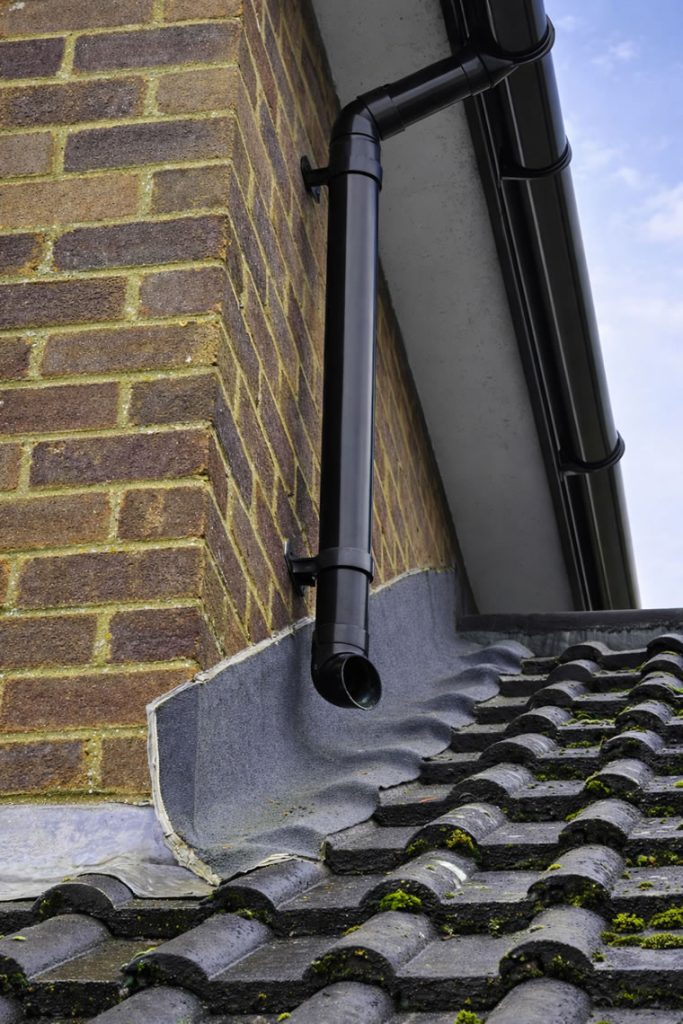
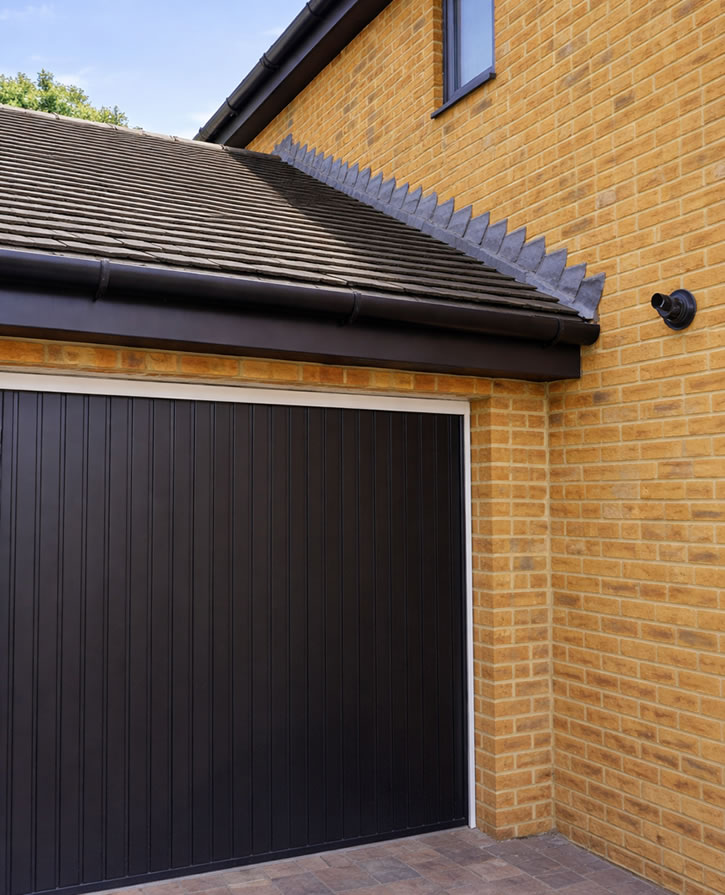
What is flashing (and why it matters)?
Flashing is usually made from lead, but it can also involve other waterproof junction details depending on the roof type and the way your garage is built. The job of flashing is to bridge the gap between:
- the roof covering (felt/EPDM/GRP/tiles/sheets), and
- a vertical surface like a house wall, parapet, or side wall.
If the flashing isn’t sealed properly, is cracked or lifted, or was never detailed correctly in the first place, water can track behind the roof covering and soak timbers and wall surfaces.
Common signs your garage flashing has failed
- Leaks appear where the garage meets the house wall
- Damp patches high up on the wall or at the ceiling line
- Water runs down the inside wall after heavy rain
- The leak happens mostly in windy weather (wind-driven rain)
- Cracked sealant lines or visible gaps at the junction
- Loose, lifted, or damaged leadwork
- Staining or algae marks at the junction outside
Where flashing problems happen most often
1) Garage roof to house wall (most common)
This is the classic “attached garage leak”. Water enters at the join and travels along timbers before dripping inside.
2) Side wall abutments
Where the garage roof meets a side wall, the junction must direct water safely onto the roof covering and into the guttering/outlet.
3) Parapet walls and upstands
Upstands (raised edges) and parapet walls need correct detailing to prevent wind-driven rain tracking behind.
4) Around penetrations (less common for garages)
If you have vents, pipes or rooflights, any junction around them needs proper sealing and detailing.
Symptoms vs likely causes (quick diagnosis table)
| What you notice | Most likely cause | What a proper repair usually involves |
|---|---|---|
| Leak right where roof meets wall | Failed flashing or poor junction detailing | Repair/replace flashing, correct junction layers |
| Leak only in windy rain | Lifted edges, gaps in cover flashing | Secure/renew cover flashing and seals |
| Damp line along wall inside | Water tracking behind junction | Strip back locally, dry/repair timbers, re-detail junction |
| Visible cracking at seal line | Aged sealant, movement, poor adhesion | Renew seal properly (not just smear more on) |
| Staining/algae at junction outside | Persistent moisture at join | Improve shedding of water, correct overlaps |
| Drips appear far from junction | Water travelling along joists | Leak tracing + junction repair at the true entry point |
Garage roof flashing repair types
Lead flashing repairs (common on UK homes)
- Re-securing lifted lead edges
- Repairing splits, cracks, or fatigue points
- Renewing step flashing and cover flashing
- Correcting poor chases and re-pointing where required
- Replacing failed sections with correctly sized leadwork
Flat roof junction detailing (felt, EPDM, GRP)
- Upstand repairs and re-dressing
- Correcting edge trims and termination bars
- Rebuilding junction layers to prevent water tracking
- Re-sealing with the right products for the system (not generic sealant)
Pitched roof junction repairs (tiled garages)
- Step flashing repairs at side abutments
- Cover flashing renewal
- Verge and junction tidy-up to stop wind-driven rain ingress
Get free flashing repair quotes
Flashing repair vs replacement: when is it which?
Flashing can often be repaired or replaced locally without replacing the whole roof — but it depends on the roof’s overall condition.
| Situation | Usually best as… |
|---|---|
| Roof covering is in good condition but the junction leaks | Flashing repair/replacement |
| Lead is split, lifted, or poorly fitted | Flashing replacement |
| Multiple leaks across the roof plus junction issues | Roof repair/replacement (and flashing done properly as part of it) |
| Old felt is brittle and failing at edges and joints | Replacement likely better value long-term |
What affects the cost of flashing repairs?
- Roof type (flat/pitched) and junction complexity
- Length of the flashing run and accessibility
- Whether existing leadwork can be repaired or must be replaced
- Condition of the wall chase/pointing
- Any damage found behind the flashing (wet timbers, softened decking)
- Whether guttering/outlets also need attention
Guide prices (ballpark)
| Job type | Typical range (guide) |
|---|---|
| Minor junction reseal / local flashing tidy-up | £150–£350 |
| Repairing small sections of lead flashing | £200–£600 |
| Replacing step flashing / cover flashing run | £350–£1,200+ |
| Local timber/deck repairs behind flashing (if needed) | £250–£900+ |
Why “sealant fixes” often fail
Many junction leaks come back because someone applied sealant over a gap without fixing the underlying detail. A longer-lasting repair usually:
- reinstates correct overlaps and water-shedding layers
- secures the flashing mechanically where required
- uses proper termination details (rather than relying on sealant alone)
- checks drainage and gutters so water isn’t overflowing at the junction
How it works
- Tell us where the leak is (postcode + “leaking at wall join” etc.)
- We match you with suitable professionals for flashing/junction work
- Compare quotes and choose what suits you best
Tip: If water is actively coming in, write “urgent leak” in your request.
Get free flashing repair quotes
What to include in your quote request
- Your postcode
- Whether the garage is attached to the house
- Where the leak shows up (wall join, side wall, corner, ceiling line)
- When it happens (windy rain vs all rain)
- Any visible issues outside (lifted lead, cracked seal line, staining)
- Single or double garage (approx.)
- Access notes (tight driveway, height, obstructions)
Garage roof flashing FAQs
What is flashing on a garage roof?
Flashing is the waterproofing detail that seals the join between a roof and a wall or another surface. It stops water tracking behind the roof covering and into the structure.
Why does my garage leak where it meets the house?
That junction is exposed to wind-driven rain and movement over time. If the flashing is lifted, cracked, poorly fitted, or the seal/pointing has failed, water can track behind and leak inside.
Can flashing be repaired without replacing the roof?
Often yes — if the roof covering is generally in decent condition and the leak is mainly from the junction detail. If the roof is also failing in multiple places, it may be better to address everything together.
Is lead flashing always used?
Lead is common on UK properties, but some garages use other junction details depending on roof type and build. What matters is that the join is detailed to shed water correctly and remain watertight long term.
How long do flashing repairs last?
When the junction is detailed properly (not just sealed over), repairs can last many years. Longevity depends on roof condition, materials used, and how exposed the junction is to weather.
Can gutters cause junction leaks?
Yes. Overflowing gutters or blocked outlets can force water back toward junctions and edges, worsening leaks and damp. That’s why roofers often check guttering as part of diagnosis.