

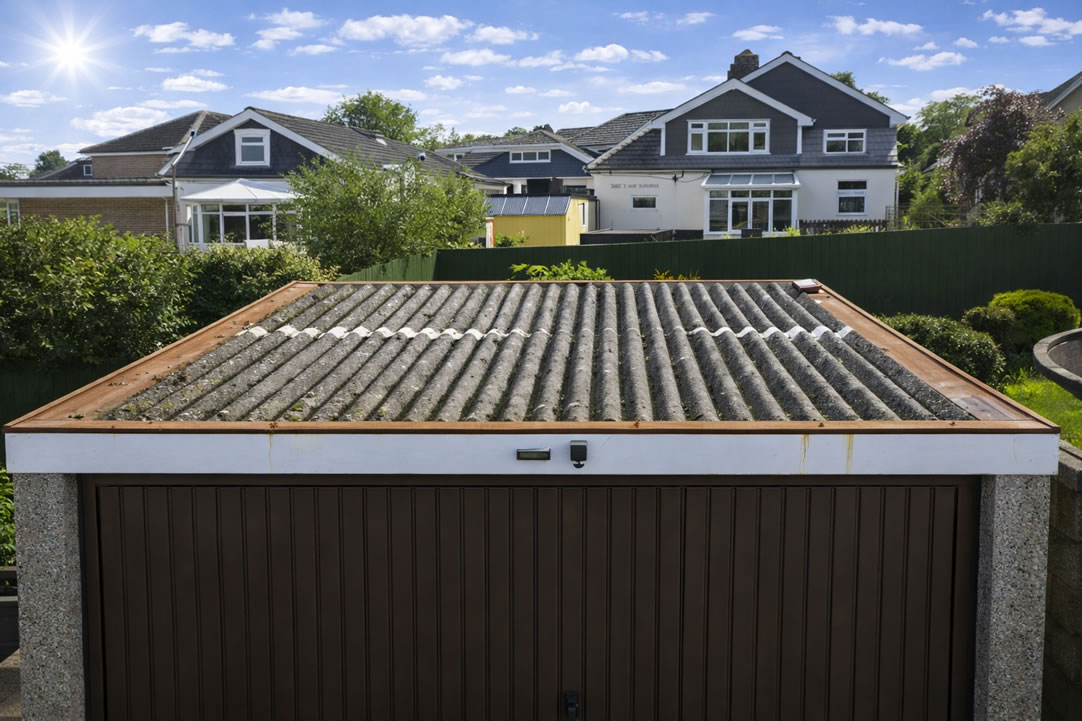
If you’ve got a corrugated asbestos cement garage roof that’s leaking, cracking, or simply past its best, replacement is often the sensible long-term answer. However, asbestos work isn’t “just another roofing job”. UK rules focus on controlling fibre release, choosing the right type of contractor, and disposing of waste correctly.
This guide explains the compliant, real-world process at a homeowner level (without DIY “how-to” details that risk disturbing the material).
First: what counts as “compliant” in practice?
For most garages, the roof sheets are asbestos cement (a lower-risk ACM when intact), and asbestos removal often falls under non-licensed work, sometimes Notifiable Non-Licensed Work (NNLW) depending on the task and condition. Contractors need to assess that properly before starting.
The safest outcome usually comes from using a contractor who follows HSE’s Asbestos Essentials guidance for asbestos cement work, rather than treating it as standard strip-and-replace roofing.
Step 1: Confirm what the roof is (or treat it as asbestos until proven otherwise)
You have two practical routes:
- Survey / sampling if you need certainty (common before major works).
- Assume asbestos cement for planning and get quotes accordingly.
If you’re unsure, GOV.UK advises using local council and official guidance for asbestos in the home and disposal routes.
Step 2: Choose the right contractor type (licensed vs non-licensed / NNLW)
Most asbestos cement sheet work can be non-licensed, but the contractor still has duties around:
- risk assessment and exposure control
- training/competence
- safe working methods and waste handling
HSE explains the split between licensed, non-licensed, and NNLW, and notes that some work with asbestos cement products can fall under NNLW.
What this means for homeowners: don’t focus only on the word “licensed”. Instead, ask whether the contractor will treat the job as non-licensed or NNLW and which HSE task guidance they’ll follow.
Step 3: Pre-start planning (what a compliant job usually includes)
Before anyone removes sheets, a good contractor will typically cover:
Site and access planning
- safe access method (fragile roof risk matters)
- protecting driveways, neighbouring areas, and gardens from debris
- planning removal without breaking sheets (breakage increases risk)
Paperwork and controls (contractor side)
- risk assessment + method statement
- deciding whether the job is NNLW (and completing any required notification/records/medical requirements for workers where applicable)
- waste plan: wrapping, transport, and disposal route
HSE’s Asbestos Essentials includes task sheets specifically for removing asbestos cement sheets and dismantling small asbestos cement structures, which is the typical garage scenario.
Step 4: Removal and making the site safe (high-level overview)
A compliant approach aims to minimise disturbance and control dust/debris. In practice, that usually means:
- removing sheets in a controlled way to avoid breakage
- controlling debris (especially around fixings, gutters, and ground)
- keeping the area tidy and preventing spread
For trades, HSE’s task sheets set out “good practice” for asbestos cement removal on a small scale.
Step 5: Wrapping, transporting, and disposing of asbestos waste properly
Asbestos cement is hazardous waste. Disposal rules vary by council and facility, and councils often require specific wrapping standards and may offer booked collections for cement-bonded asbestos.
What you should expect on a proper quote:
- clear statement of how waste will be packaged
- where it will be taken (licensed disposal route)
- confirmation that disposal is included (not “customer to dispose”)
Step 6: Replacement roof installation (the normal roofing part)
Once the asbestos cement is removed and waste is dealt with correctly, the job becomes a standard garage roof replacement.
Typical replacement routes include:
- EPDM (popular for flat garage roofs)
- GRP fibreglass
- torch-on felt
- steel or modern fibre-cement sheets (non-asbestos)
- new pitched roof covering if you’re changing structure
If you’re comparing quotes, ask the roofer to confirm:
- edge trims/drip details into guttering
- ventilation/condensation considerations
- insulation choice if you want a warmer, drier garage
Red flags to avoid (common non-compliant vibes)
Be cautious if you hear:
- “We’ll just break it up to make it easier”
- “You can take the sheets to the tip yourself”
- “We’ll scrape/brush/pressure wash it first”
- vague wording like “remove old roof” with no mention of asbestos handling
Some council guidance explicitly warns against abrasive cleaning methods (dry brushing, scraping) on asbestos cement.
Quote request template (copy/paste)
- Postcode
- Garage: detached / attached
- Roof type: suspected asbestos cement corrugated sheets (or flat sheets)
- Condition: leaking / cracked / heavy moss / generally intact
- Access: single/double garage, driveway clearance, any conservatory nearby
- Goal: removal + replacement (include disposal)
- Ask:
- “Will you assess if this is non-licensed or NNLW?”
- “Which HSE Asbestos Essentials task guidance will you follow for asbestos cement removal?”
- “Is waste packaging + disposal included in the quote?”
FAQs
Do I need a licensed asbestos contractor for a garage roof?
Not always. Many asbestos cement sheet jobs fall under non-licensed work, although some can be NNLW depending on the task and condition. The contractor should assess and explain that.
What paperwork should a proper contractor have?
You should expect a risk assessment/method statement and a clear waste disposal plan. If the work is NNLW, additional notification/record and medical requirements apply to the contractor.
Can I dispose of asbestos cement sheets at my local tip?
Rules vary by council. Many councils have specific rules for asbestos and may require booking and strict wrapping, or they offer collections for cement-bonded asbestos. Check your local council guidance.
Is it better to repair an asbestos cement roof instead of replacing it?
If the roof is in good condition, leaving it alone can reduce disturbance risk. However, if it leaks or deteriorates, replacement often becomes the practical long-term solution.

