
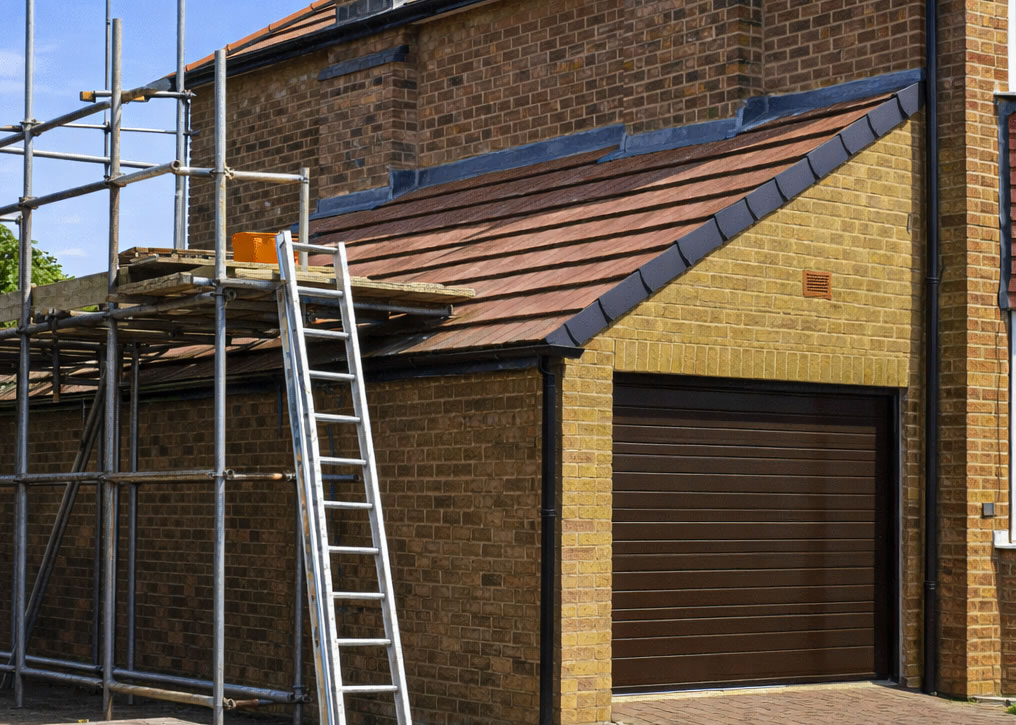

Signs your pitched garage roof needs repair
- Leaks or drips during heavy rain
- Damp patches high on the walls or ceiling line
- Tiles look uneven, slipped, or missing
- Bits of mortar or debris on the ground after windy weather
- Ridge line looks cracked or loose
- Verge edges look damaged or open to the wind
- Guttering overflows and water runs down the wall
- Daylight visible through the roof from inside (in some cases)
Common pitched garage roof problems (and what they usually mean)
This table helps homeowners describe the issue clearly and helps roofers quote more accurately.
| What you notice | Most likely cause | Typical repair approach |
|---|---|---|
| A few slipped or broken tiles | Storm damage or failed fixings | Replace/re-fix tiles and check surrounding area |
| Leak near roof edge | Verge failure, broken tiles, or gutter overflow | Repair verge/tiles and check gutter alignment |
| Loose ridge tiles / cracks on ridge line | Ridge mortar failed or movement | Re-bed/re-point ridge tiles or repair locally |
| Water staining on ceiling line | Water tracking under tiles | Identify entry point and repair tiles/underlay detail |
| Leak at garage-to-house side | Junction flashing/abutment detail | Repair/renew flashing and junction detailing |
| Debris/mortar falling after storms | Ageing mortar at ridges/verges | Local re-pointing or re-bedding as required |
| Persistent damp on walls | Overflowing gutters/downpipes | Repair guttering and drainage (often solves it) |
Pitched garage roof repair services
Tile and slate repairs
- Replacing broken or slipped tiles
- Re-fixing loose tiles and checking adjacent areas
- Repairing local sections after storm damage
- Addressing issues around verge edges
Ridge repairs
- Ridge tile re-pointing where suitable
- Ridge tile re-bedding where needed (more robust)
- Local repairs to cracked ridge mortar
- Fixing ridge movement and preventing repeat failures
Verge and edge repairs
- Repairing damaged verges (common on windy elevations)
- Closing gaps where wind-driven rain gets in
- Re-pointing/verge repairs depending on construction
- Improving edge detailing to reduce repeat leaks
Valley and junction repairs (where applicable)
- Valley repairs (where two slopes meet)
- Junction leak repairs where the garage meets another structure
- Flashing repairs for abutments and side walls
Timber and batten repairs (if needed)
If water has been getting in for a while, local timber repairs may be required.
- Local batten repairs
- Minor timber/rafter repairs (where affected)
- Addressing damp/rot at the roof edge if caused by overflow
Guttering checks and fixes
Pitched garage “roof leaks” are sometimes gutter issues.
- Realigning gutters so water flows correctly
- Fixing leaking joints and corners
- Outlet/downpipe repairs and block removal
- Preventing overflow that soaks fascias and walls
Repair vs replacement for pitched garage roofs
Many pitched garage roofs can be repaired cost-effectively — especially when damage is local.
| Scenario | Usually best as… | Why |
|---|---|---|
| A few slipped/broken tiles | Repair | Local work restores weatherproofing |
| Ridge/verge failure in one area | Repair | Often isolated and fixable |
| Roof is generally sound, no widespread issues | Repair | Good value, avoids unnecessary replacement |
| Repeated tile movement across large areas | Inspection needed | May indicate batten/structure issues |
| Multiple leaks + widespread deterioration | Replacement may be better | Long-term value improves with renewal |
Guide prices for common pitched garage roof repairs (ballpark)
Exact quotes depend on access, roof height, materials, and how much work is needed.
| Repair type | Typical range (guide) |
|---|---|
| Replace/re-fix a small number of tiles | £150–£600 |
| Local ridge repairs / re-pointing | £200–£900 |
| Ridge re-bedding (section) | £350–£1,200+ |
| Verge repairs (local) | £200–£900 |
| Flashing/junction repair | £200–£1,200+ |
| Minor timber/batten repairs (if needed) | £250–£1,200+ |
| Gutter repairs contributing to damp/leaks | £60–£250+ |
What affects the cost?
- Number of tiles/slates affected and the roof pitch
- Access and safe working requirements
- Whether ridge/verge work is needed
- Condition of battens/underlay (if visible/accessible)
- Junction details (attached garages, side walls)
- Whether guttering/drainage work is also required
How it works
- Tell us what you’ve noticed (postcode + issue details)
- We match you with suitable professionals for pitched roof work
- Compare quotes and choose what suits you best
Tip: If water is actively coming in, write “urgent leak” in your request.
What to include in your quote request
- Your postcode
- What’s happening (slipped tiles, ridge cracks, verge damage, leaks)
- Whether it started after storms or gradually
- Any visible damage from ground level (missing tiles, uneven ridge line)
- Attached or detached garage (junction leaks matter)
- Single or double garage (approx.)
- Any access notes (tight driveway, height, obstructions)
Pitched garage roof FAQs
Can a pitched garage roof leak even if the tiles look fine?
Yes. Water can get in through small gaps at ridges/verges, junction flashing, or under tiles if wind-driven rain finds a weak point. The visible drip inside may appear away from the entry point.
Do slipped tiles mean the whole roof needs replacing?
Not usually. Slipped or broken tiles are often local repairs. Replacement is typically only considered if issues are widespread or the roof structure/underlay is failing across large areas.
What’s the difference between ridge re-pointing and re-bedding?
Re-pointing refreshes the mortar at the joints. Re-bedding involves lifting ridge tiles and resetting them more securely. The best option depends on the condition of the ridge and how loose it is.
Why do verge edges fail?
Verge edges take the brunt of wind and rain. Mortar can crack over time, and movement can open gaps. Repairing verges properly helps prevent wind-driven rain getting under tiles.
Can guttering issues cause damp that looks like a roof leak?
Yes. Overflowing gutters can soak fascia boards and walls and create damp patches inside. That’s why guttering is often checked during roof leak diagnosis.