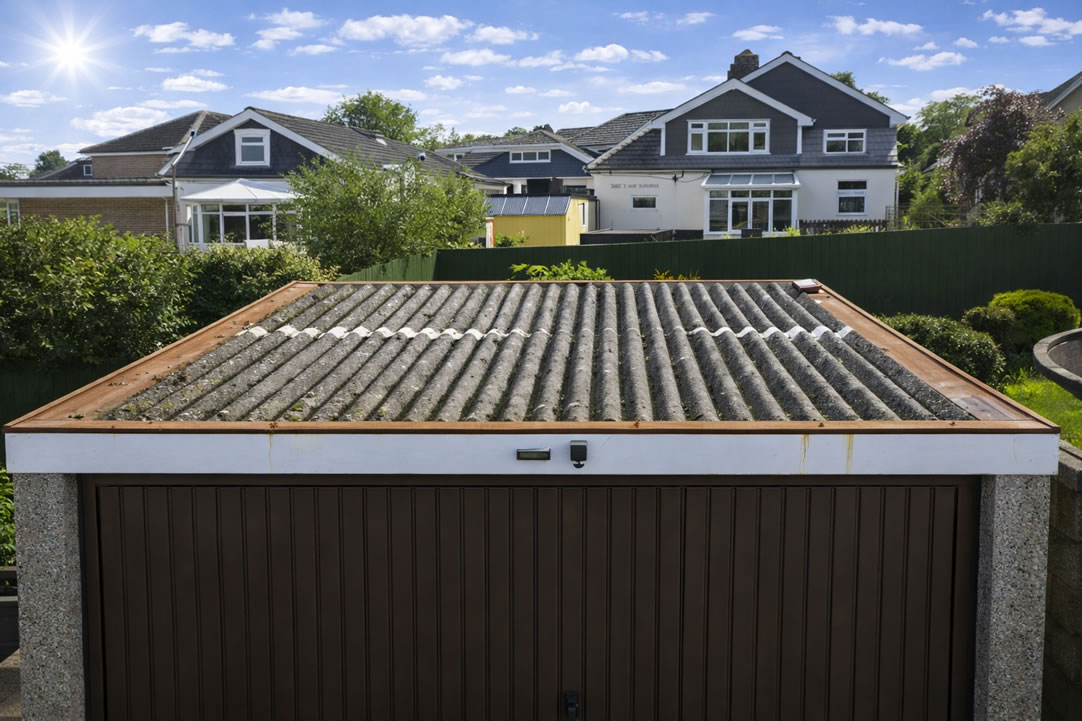
If your garage has old corrugated sheets or flat grey panels, you might wonder: is this asbestos cement? In the UK, asbestos cement was widely used outdoors, so it still turns up on many garages today. However, you should treat any suspected asbestos-containing material as hazardous until a competent person confirms otherwise.
This guide helps you spot the common clues safely, without disturbing the material.
First, the golden rule: don’t “test” it by touching, snapping, drilling, sanding, or pressure washing
Asbestos risk increases when you damage or abrade the sheet and release fibres. For that reason, avoid any DIY “checking” that involves breaking, cutting, or cleaning aggressively. If you need certainty, arrange a professional survey or sample test instead.
What asbestos cement usually looks like on a garage roof
Asbestos cement roof commonly appears as:
- Corrugated roofing sheets (classic garage roof look)
- Flat sheets/panels used as roof boards or side cladding
- Sometimes also cement gutters and downpipes on older outbuildings
Even so, visuals can only suggest likelihood — they can’t confirm it 100%.
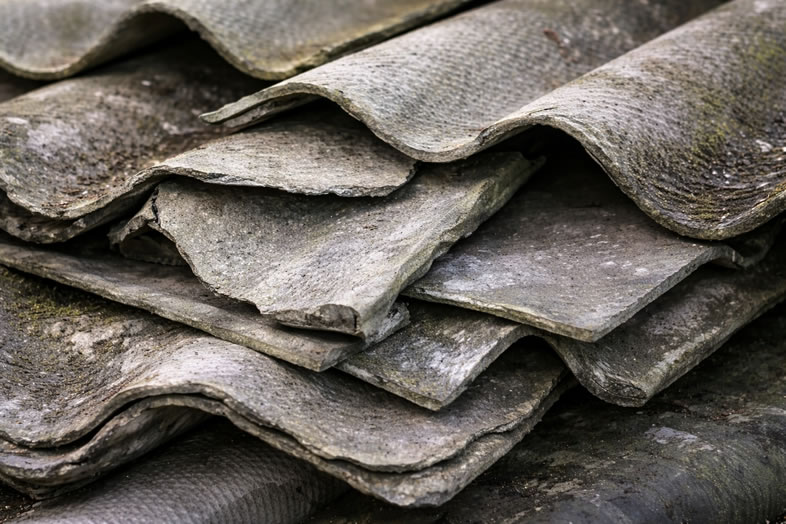
Safe identification checklist (no contact, no disturbance)
Use these checks from ground level or through a window if you can see the underside.
1) Age clues: when was the garage roof installed?
If the garage (or roof) dates from the late 1900s, asbestos cement becomes more likely. However, people also reused old sheets for years, so age alone doesn’t prove anything. (Therefore, treat it as “possible” until tested.)
2) Sheet style: corrugated “cement” profile
Asbestos cement garage roofs often use corrugated sheets that look like “concrete” rather than metal. In addition, the sheets tend to look thicker and more rigid than cheap bitumen corrugated sheets.
3) Surface look: weathered grey with a chalky, matte finish
Many asbestos cement sheets weather to a dull grey surface and may show moss/lichen. That said, lots of non-asbestos fibre-cement products can look similar, so don’t rely on colour alone.
4) Fixings: bolts and large washers (often visible as raised points)
Many asbestos cement sheets were fixed with bolts/hooks and washers, so you may see raised fixing points along the sheet ridges. Again, this is a clue, not proof.
5) Underside view: flat, cement-like back face
If you can safely see underneath (without climbing), asbestos cement typically looks like a cement board from below: hard, grey, and relatively uniform.
6) Fragility warning: treat it as fragile even if it looks solid
Asbestos cement roofs can be fragile (and dangerous to walk on). In fact, HSE safety guidance highlights fragile roofing risks, including asbestos cement sheets. So, avoid going up there. Get some asbestos removal quotes from specialist companies.
“Looks like asbestos cement” vs “probably not” (quick guide)
| Feature | More consistent with asbestos cement | More consistent with something else |
|---|---|---|
| Sheet type | corrugated cement sheets on older garages | thin corrugated bitumen/plastic sheets |
| Finish | dull, chalky, weathered grey | shiny metal; translucent plastic rooflights |
| Fixings | bolts/hooks + big washers visible | hidden fixings, or metal sheet screws with rubber washers |
| Weight/rigidity (don’t lift!) | appears rigid and heavy | looks thin and flexible |
Because overlap exists, only testing can confirm.
How to confirm safely (the right way)
Option A: Asbestos survey / sample test
A competent asbestos surveyor can take a controlled sample and send it to a lab. This gives you a clear answer without guesswork. HSE guidance supports using proper identification resources and taking the right action when asbestos is present.
Option B: Assume it is asbestos cement and plan accordingly
If you don’t need confirmation yet, you can simply treat it as asbestos cement for planning purposes (especially before repairs, removal, or replacement).
What to do if you suspect asbestos cement
- Stop any planned work that might disturb the sheets (drilling, sanding, cutting, scraping).
- Keep it intact. Intact asbestos cement generally presents less risk than damaged material, so avoid breaking it up.
- Avoid cleaning methods that damage the surface, especially aggressive scraping or pressure washing.
- Get quotes from contractors who understand asbestos cement and can advise on next steps. HSE provides task-based guidance for work involving asbestos cement, which signals that method and competence matter.
- Check disposal rules locally (your council will normally specify how asbestos waste must be handled).
Common “don’t do this” mistakes homeowners make
- “I’ll just drill a small hole to check.” (Don’t.)
- “I’ll scrape the moss off.” (Avoid — disturbance raises risk.)
- “I’ll pressure wash it and paint it later.” (Avoid aggressive cleaning.)
- “I’ll break the sheet into smaller pieces to get it in the car.” (HSE advises against breaking intact asbestos cement sheets into smaller pieces for disposal.)
If you need a quote: what to tell contractors (copy/paste)
- Postcode
- Garage roof type: corrugated sheet / flat sheet
- “Suspected asbestos cement roof — please advise on safest next steps”
- Condition: intact / cracked / leaking / mossy
- Access notes: attached/detached, height, driveway access
- Goal: repair / replacement / full asbestos removal and replacement
- Ask: “Do you recommend a sample test first, and can you arrange it?”
FAQs
Can I identify asbestos cement just by looking?
You can spot clues, but you can’t confirm asbestos content reliably by eye. For certainty, arrange a survey or lab test.
Is asbestos cement the same as asbestos insulating board (AIB)?
No. Asbestos cement is typically a highly bonded material used in sheets outdoors, while other asbestos materials can be higher risk. Because of that, you should never assume all asbestos behaves the same.
Is it dangerous if the roof is in good condition?
Risk increases when you disturb or damage asbestos materials. Therefore, keeping suspected asbestos cement intact and avoiding abrasive work matters.
Should I replace an asbestos cement garage roof if it’s leaking?
If the roof leaks or cracks, you should get professional advice for asbestos removal. Often, replacement becomes the practical long-term solution, especially if repairs would disturb the sheets.