
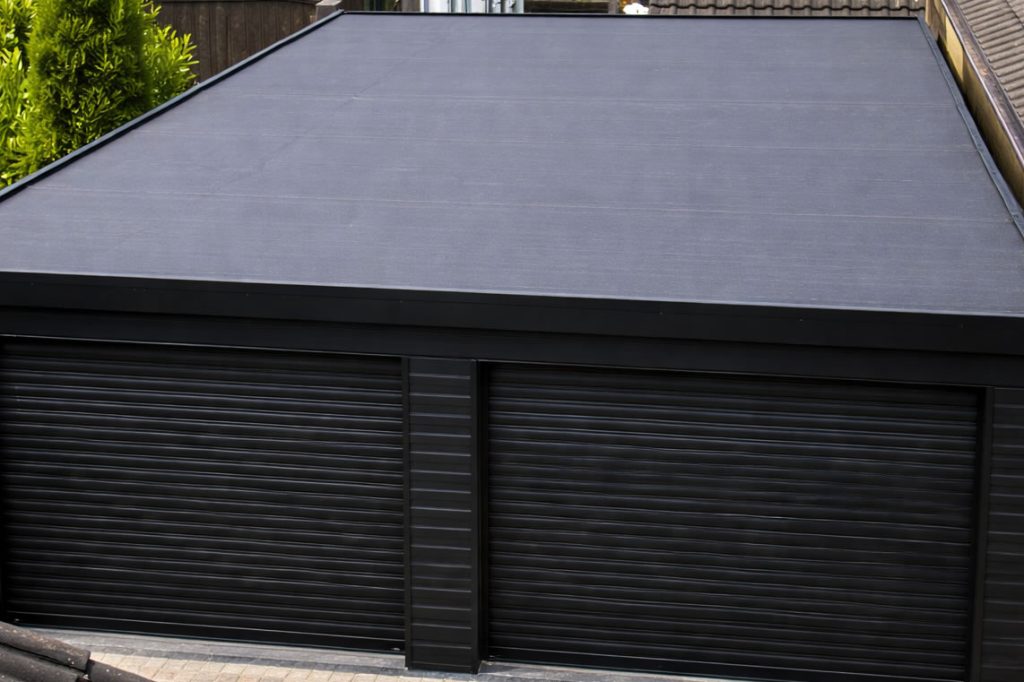
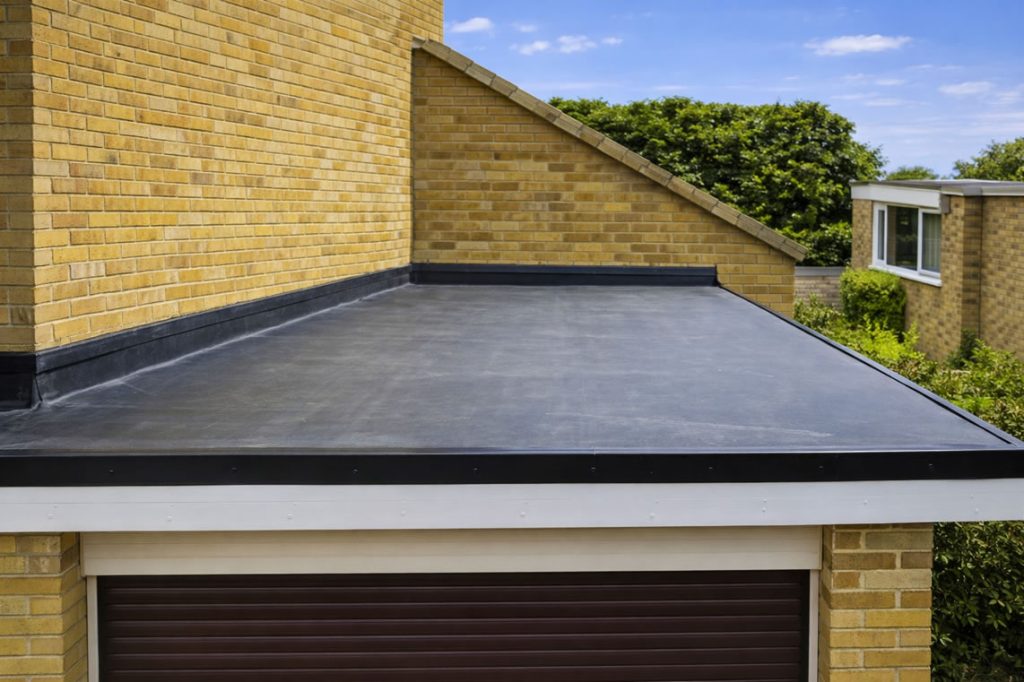
When is a flat garage roof replacement needed?
A repair can work when the issue is localised. Replacement is usually the better option when the covering is worn out or failing across larger areas.
Common signs your flat garage roof is at end of life
- Leaks keep returning, even after repairs
- Felt is brittle, cracked, lifting at edges, or heavily blistered
- The roof feels soft underfoot (possible decking/timber damage)
- Ponding water is persistent and doesn’t clear after rainfall
- Joints and corners repeatedly split or open up
- Water is getting in at the wall junction where the garage meets the house
- The roof looks uneven or has a visible sag
If you’re unsure, describe what you’ve noticed and you’ll get quotes and advice based on your garage roof.
Flat garage roof options: felt vs EPDM vs GRP
There isn’t one “best” option for every garage. The right choice depends on your budget, the finish you want, and your roof structure.
Comparison table
| Option | Best for | Typical benefits | Things to consider |
|---|---|---|---|
| Modern felt (built-up systems) | Great value replacements | Cost-effective, widely used, neat finish | Quality varies by system and installer detail |
| EPDM rubber | Long-term durability | Low maintenance, strong weather resistance, clean look | Needs good edge trims and junction detailing |
| GRP fibreglass | Tough, hard-wearing finish | Durable surface, smart appearance | Install quality matters (especially trims and joins) |
A good installer and good detailing matter just as much as the material. Many “flat roof failures” are actually edge, outlet or junction failures rather than the main covering.
What’s included in a proper flat garage roof replacement?
A reliable replacement includes more than just a new layer on top. It should address the parts that typically cause leaks.
Typical replacement checklist
- Removal of the old roof covering (where required)
- Inspection of decking and timbers
- Replacement of any rotten or softened boards
- New underlayer/membrane (depending on system)
- New roof covering (felt/EPDM/GRP)
- New edge trims and clean perimeter detailing
- Wall-junction detailing (especially where garage meets the house)
- Outlet/drainage checks and improvements where needed
- Optional: guttering repairs or replacement if contributing to damp/overflow
Common flat garage roof replacement scenarios
| Reason homeowners replace | What they usually notice | Why replacement helps |
|---|---|---|
| Old felt breaking down | Cracks, blisters, lifting edges | Restores full waterproofing in one job |
| Recurring leaks | “Fixed once, then leaks again” | Removes multiple weak points at once |
| Soft/sagging areas | Spongy feel, uneven roofline | Allows deck/timber repair before re-covering |
| Persistent ponding | Water sits for days | Chance to improve drainage/outlets/falls |
| Junction leaks at the house | Damp at the wall join | Correct detailing prevents water tracking in |
Guide prices: flat garage roof replacement (ballpark ranges)
Exact quotes depend on size (single/double), access, condition of decking/timbers, and the system chosen.
Typical cost table for garage roof replacement (guide only)
| Job type | What it usually includes | Typical range (guide) |
|---|---|---|
| Single flat garage roof replacement | New covering + trims | £700–£1,200 |
| Double flat garage roof replacement | Larger area + trims/drainage | £1,000–£1,800 |
| Replacing rotten decking/timbers (local) | Repairs discovered during strip-off | £250–£1,200+ |
| New outlets/drainage improvements | Addressing flow/ponding issues | £150–£600+ |
| Optional guttering replacement | Gutters/outlets/downpipes | £150–£900+ |
Budget tip: If you’ve already paid for multiple repairs in the last couple of years, replacement often works out cheaper overall and gives you a fresh start with modern detailing.
How long does a flat garage roof replacement take?
Many flat garage roof replacements can be completed within one day, sometimes two, depending on:
- single vs double garage size
- whether old covering needs stripping
- any decking/timber repairs
- weather conditions
- material choice and curing times
How it works
- Tell us about your roof (postcode + what’s happening)
- We match you with suitable professionals for flat roof work
- Compare quotes and choose what suits you best
What to include in your quote request
- Your postcode
- Approximate garage size (single/double)
- What’s happening (leaks, cracks, bubbling, ponding, soft spots)
- Whether the garage is attached to the house (junction leaks)
- Any access notes (tight driveway, height, obstructions)
- If you’d like a like-for-like replacement or to upgrade materials
Flat garage roof replacement FAQs
Can I replace a flat garage roof without replacing the whole structure?
Often, yes. Most replacements involve renewing the roof covering and repairing any affected boards or timbers, while keeping the main structure intact. An inspection confirms what’s required.
Is EPDM better than felt for a garage roof?
EPDM can be a great option for durability and low maintenance, while modern felt systems can offer strong value. The best choice depends on your budget, desired finish, and the condition of the roof structure. Good detailing matters for every system.
Why does my flat garage roof keep leaking after repairs?
Often the leak is coming from a weak point such as an edge, joint, outlet, or wall junction — not necessarily the main covering. If multiple weak points exist, replacement can be more reliable than repeated patch repairs.
Is ponding water a reason to replace the roof?
Not always, but persistent standing water can shorten the life of the roof and increase the chance of leaks. Sometimes improving drainage/outlets is enough; other times low spots or deck issues make replacement the better option.
Will a new flat garage roof stop condensation?
A watertight roof helps, but condensation can also be caused by poor ventilation and temperature differences. Mention condensation in your request so the right solution can be discussed.
Do I need planning permission to replace a flat garage roof?
Many like-for-like replacements don’t require planning permission, but rules can vary if you change the structure/height. If unsure, check with your local authority.